Home India South India Karnataka Hampi
In northern Karnataka, on the banks of the River Tungabadhra, lies the city of Hampi, capital of the great Vijaynagar Empire from the 14th century and one of India’s archaeological highlights. The city was destroyed in 1565 after the Battle of Talikota in which the Vijayanagar army was defeated by the Bijapur confederacy. Hampi is around 330km from Goa, make a highly worthwhile, and popular, side trip from the coast. Many of the temples and palaces in the city are World Heritage site. Main trade of the city is cotton and spice and these contribute to the city’s wealth. The site, which comprises the Sacred and Royal centres, has a superb location with rocky ridges and granite boulders acting as natural defences.

The ancient temple of Virupaksha, dedicated to the goddess Pampa and her consort Shiva is dominated by 50 m high Gopura. It is the oldest and the principal temple in Hampi, noted for its architecture and has been listed among the UNESCO World Heritage Sites. This temple is located on the south bank of the river Tungabadra. The very origin of Hampi’s history as a sacred place revolves around the myths associated with this temple. The Virupaksha Temple consists of an open pillared hall and a pillared hall, three ante chambers and a sanctum.

The grandest of all the religious monuments in the Scared Centre, the Vitthala Temple represents the high point of Vijayanagar art and architecture. It is noted for its remarkable sculptural details. The temple was originally built in the 15th century AD and many successive kings have enhanced the temple including in the 16th century by two of Vijaynagar’s greatest rulers, Krishnadeva Raya and Achyuta Raya. The temple is built in the form of a sprawling campus with compound wall and gateway towers. There are many halls, pavilions and temples located inside this campus.

A skillful blend of Hindu and Islamic architecture, this building may have served as a council chamber for the king. The way that people had done air conditioning in those times is brilliant. Water flows all over (may not be pumped - only by slope or siphon) to keep the palace cool. Also known as Chitragani Mahal and Kamal Mahal, this falls under the secular or nonreligious categories of structures in Hampi. The shape of the structure is what brought it the name. The archways and the balcony with the domed construction resemble a half opened lotus bud. Also is the lotus bud shape carved on to the center dome. It’s peculiar to note that this is one of the beautiful structures that were left undamaged during the siege of the city

This long structure with a row of 11 chambers, some of them inter-connected, once housed the royal elephants. The center one is specially decorated and big. Probably the musicians and the associated band troupes had been using this during ceremonies involving elephant processions. The domes are of brick, mortar and are of different shapes like that of drum-shaped, ribbed and octagonal. Among the many civil structures of the place, this building is a fine example of Indo-Islamic style of architecture.
Hampi,India
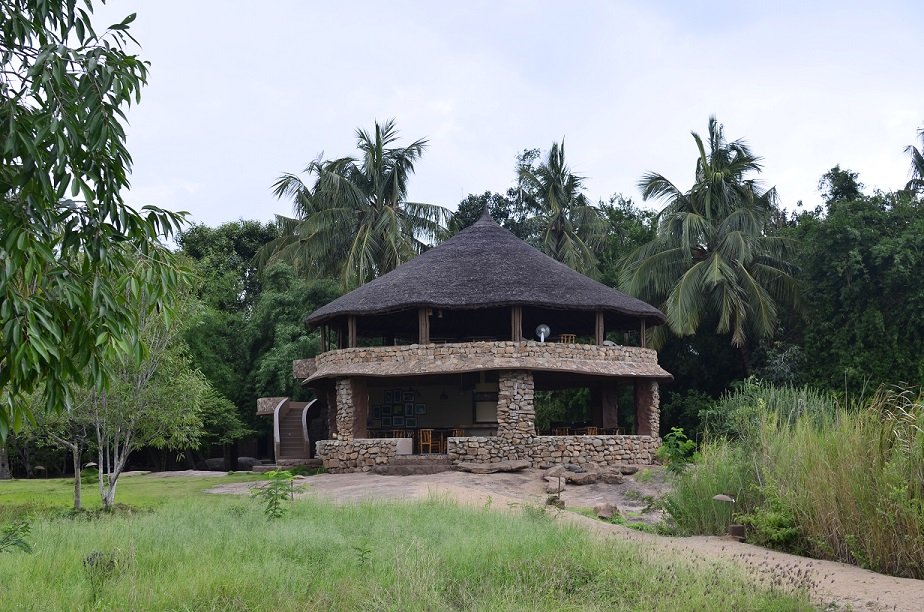
Hampi's Boulders is set in and among the enormous natural boulders that define Karnataka's splendid landscape. The resort is located 7 kms from the World Heritage site of Hampi's Vijayanagar era temple ruins on the banks of the Tungabadara river in the Yamini hills. There's also a gorgeous veranda and a ...
Population: 59,941
Average Climate:
| Summer: | 20° C – 40° C |
| Winter: | 12° C – 30° C |
Best time to visit: October to March