City guide

Bengaluru

The capital city of Karnataka, Bangalore got its name from `Bengala Uru’ meaning `village of beans’, now the name is reverting to Bengalooru. The city was founded in 1531 by a chiefta...

Destination overview

Bengaluru Travel Guide

The capital city of Karnataka, Bangalore got its name from `Bengala Uru’ meaning `village of beans’, now the name is reverting to Bengalooru. The city was founded in 1531 by a chieftain, Kempe Gowda. In the year 1638, the Vijayanagara Empire fell to the Sultan of Bijapur, Mohammed Adil Shah. And for the next sixty years the city remains under the rule of the Sultans. Thereafter,  Mughals took over the city. The rule of Mughals however did not last too long and in 1687, they sold the kingdom to King Chikkadevaraja Wodeyar of Mysore. Hyder Ali received Bangalore in the form of jagir in 1759 from Krishna Raja Wodeyar II. He then converted the city into an army town.  During the British period Bengalore was a popular garrison town with a pleasant climate, parks and gardens. Post-Independence the city has witnessed large scale development and has grown in leaps and bounds. It is often described as Asia’s Silicon Valley because of its thriving information technology industry. It is India’s fifth largest and fastest growing city. The city is blessed with a benevolent climate and a burgeoning drinking, dining and shopping scene. 

KarnatakaState South IndiaRegion 4+Stays
Population 9.5 million
Geo Location
Average Climate
Summer 21°C – 35°C Winter 17°C – 28°C
Best Time To Visit October to March
Highlights

Tourist Attractions in Bengaluru

Vidhana Soudha

Vidhana Soudha

The Secretariat and the State Legislature of Karnataka is housed in this building which is built of granite and porphyry. It was constructed in 1956 after transfer of power from the ruling Wodeyar dynasty to the central government, it was designed by Kengal Hanumanthaiah, the then chief minister, who intended it to `reflect the power and dignity of the people’. The Vidhana Soudha is a huge edifice of a building and covers an area of 700 feet by 350 feet making it the largest legislative building in India. Its eastern facade has a porch with 12 granite columns, 40 feet tall above which is inscribed the sentence `Government Work is God's Work’.

Tipu Sultan's Summer Palace

Tipu Sultan's Summer Palace

Tipu Sultan's Summer Palace, is an example of Indo-Islamic architecture and was the summer residence of the Mysorean ruler Tipu Sultan. This beautiful two-storeyed ornate teak wooden structure with exquisitely carved pillars, arches and balconies was one of Tipu's favourite summer retreats. The walls and wooden ceilings of the entire palace are painted in floral motifs in muted warm colours, gilded in great details and beauty. Hyder Ali commenced its construction within the walls of the Bangalore Fort, and it was completed during the reign of Tipu Sultan in 1791. Tipu Sultan named it Tashk-e-Jannat meaning the envy of heaven. It is constructed mainly of wood and its intricately sculptured arches and minarets are worth perusing. The walls and ceilings are covered with paintings though faded through the centuries.

Lalbagh Botanical Gardens

Lalbagh Botanical Gardens

It is located in the south of the city, a 97-hectare park laid out in the 18th century by Tipu Sultan and Hyder Ali. It is regarded as one of the most richly diverse botanical gardens in South Asia. With 1854 species, it contains India’s largest collection of rare tropical and subtropical plants, trees from Iran, Afganistan and Europe. John Cameron, the Garden’s Superintendent in the 1870’s, imported several rare species from Kew Gardens in London. Lalbagh Botanical Gardens main attraction is the Glass House, modelled on London's Crystal Palace. Lalbagh is the venue for flower shows in January and August.

Cubbon Park

Cubbon Park

The peaceful 1200 hectare Cubbon Park was laid out in 1864 by Major General Richard Sankey, the then British Chief Engineer of Mysore state and named in honour of the commissioner, Cubbon Park. Its partly formal landscaping imaginatively integrates natural rock out-croppings with groves of trees and giant bamboos.  It has a rich abundance of flora and fauna plantations coupled with some impressive colonial buildings such as the High Court of Karnataka, State Central Library and the State Archaeological Museum plus some statues of famous people including Chamarejendra Wodeyar, Queen Victoria and King Edward VII.

Selected stays

Stay in Bengaluru

Plan My Journey
ITC Windsor Bengaluru

ITC Windsor

The 'Garden City' of Bengaluru, with its year round cool climate and cosmopolitan mix of people, is the ideal setting for ITC Windsor, a LEED Plati...

Bengaluru, India View Hotel
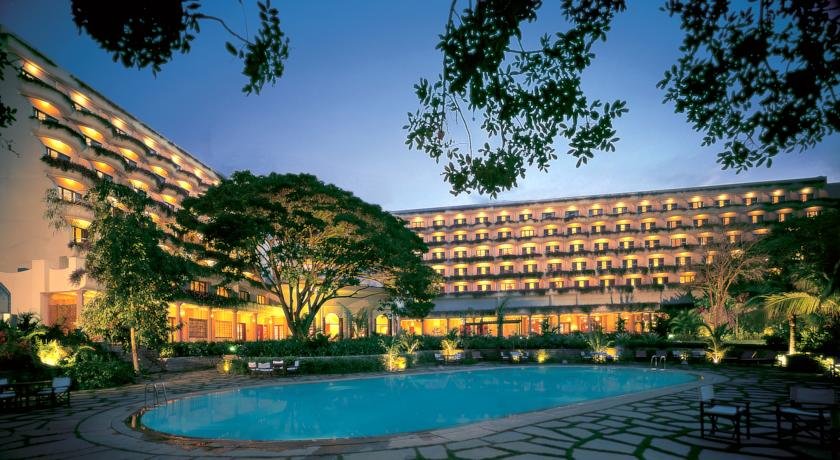
The Oberoi Bengaluru

The Oberoi

Nestled in lush, tropical grounds and equipped with the latest in technology, The Oberoi, Bangalore reflects and harmonises the dual personalities ...

Bengaluru, India View Hotel
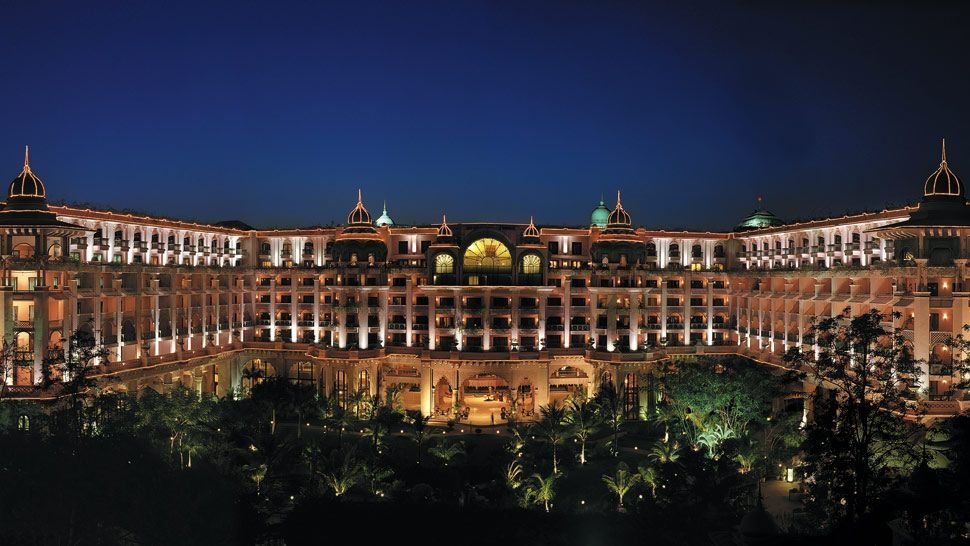
The Leela Palace Bengaluru

The Leela Palace

Drawing inspiration from the architectural style of the Royal Palace of Mysore, The Leela Palace Bangalore stands majestically amids seven acres of...

Bengaluru, India View Hotel
The Taj West End Bengaluru

The Taj West End

The Taj West End is a charming property set amid luscious 20-hectare garden in the middle of Bangalore, a bustling city. the rooms are designed wit...

Bengaluru, India View Hotel