Home India South India Karnataka Badami
Badami formerly known as Vatapi, is a town and headquarters of a taluk (tehsil) by the same name, in the Bagalkot district of Karnataka. This historic town was the capital of the powerful early Chalukya kings, who ruled the Deccan during the 6th – 7th centuries AD. It was founded in 540 A.D. by Pulakesi (535-566 AD), an early ruler of the Chalukyas. Badami still retains its majesty. Badami is situated at an average elevation of 1922 ft above the sea level at the mouth a ravine and is tucked in between two rugged sandstone outcrops. The town is famous for rock cut and other structural temples and situated within a horseshoe of red sandstone cliffs, overlooking the green waters of a large lake. The locale of its famous cave temples, made up of two giant sandstone hills. With all the cliffs surrounding the tank, Badami is a nice spot for climbing. Badami was one of the earliest places in Southern India to see a frenzy of temple building activities. Badami is famous for its beautiful cave temples, which are located around the Agasthya Lake that lies at the center of the ravine.

There are four cave temples here, and three of them are Hindu and one is a Jain Temple. Badami Chalukyas built Badami Cave Temples – some of the most exquisite Indian rock-cut temples.
This group of 4 cave temples have been carved out of the hill opposite Badami fort. The Chalukyan king, Mangalesa(598-610)AD) was responsible for the completion of these cave temples. Nearly 2000 steps have to be climbed to reach the cave. One cave is devoted to Shiva, two – to Vishnu. Fourth cave is Jain temple. Thus Chalukyas, just like several other successful dynasties of Ancient India, demonstrated religious tolerance.
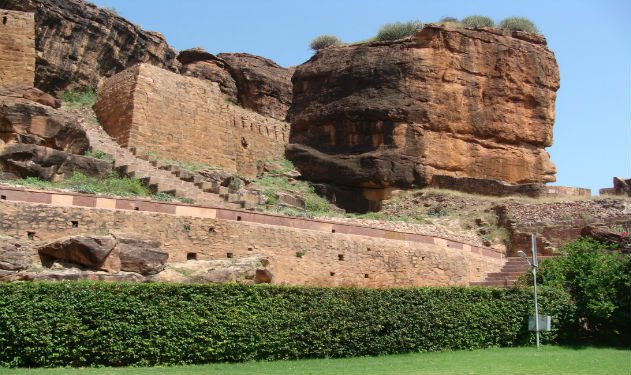
Badami Fort is the most well-known archaeological site soaked in the history of the Chalukyas and the Pallavas and strategically situated on top of the hill, the fort encloses large granaries, a treasury impressive temples on top of the northern end of the hill. Visitors have to walk all the way up to the fort. King Pulakeshi II, a devotee of Lord Vishnu had built the two Shivalayas that dates back to the 5th century. This beautiful fort is spread across two hills and further divided into North Fort and South Fort. The Badami Fort with its entrance guarded by Nandi (Shiva's bull), is immersed in archaeological splendour and culture that takes you back to pre-historic times. It is believed that once upon a time, North Fort housed Tipu Sultan’s treasury. The outer walls of the Upper Shivalaya are sculpted with mythological tales, like the elephant and lion on top of the temple steps.

Located 35 km from Badami, Aihole is a picturesque village on the banks of the Malaprabha river. Aihole has to be god's collection of temple prototypes. Believed to be the cradle of Dravidian temple architecture, Aihole's temple compendium spans styles and centuries, some as early as the 5th century - and some, like the Durga Temple is built on design that is seen nowhere else in the country. The Badami Chalukyas first had their capital at Aihole before they moved to Badami and its justified in resting on its ancient laurels. Aihole is historically famous as the cradle of Hindu temple architecture. There are about 125 temples divided into 22 groups scattered all over the villages and nearby fields. Most of these temples were built between the 6th and 8th centuries and some even earlier.
Badami,India
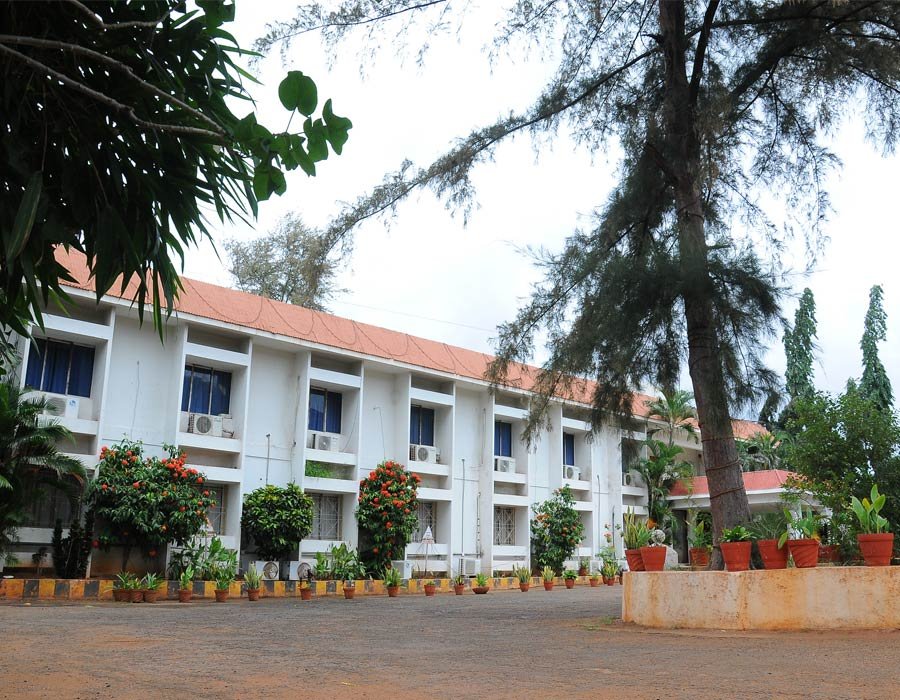
The Badami Court hotel sits in pastoral coutry-side 2kms from the noisy town center. Rooms are functional than plush. ...
Population: 25,851
Average Climate:
| Summer: | 22° C – 35° C |
| Winter: | 15° C – 28° C |
Best time to visit: September and February