PLAN A TRIP


Gwalior founded by Maharaj Suraj Sen and named after Saint Gwalipa, is the northernmost city of Madhya Pradesh and was established in 8th century AD. Gwalior remained a princely state of British Raj before Independence with Scindias as the local ruler. The city is surrounded by high rocky hills from all sides, on the north it forms the border of the Ganga - Yamuna Drainage Basin. It is situated on the valley between the hills of Plateau. Gwalior's metropolitan area includes Lashkar, Morar, Thatipur and the City center.

Tourist Attraction


Gwalior Fort

This hilltop fort is one of the most redoubtable in the world founded in the 8th century AD. The fort is positioned at a height of 100m above the main town. The fort consists of two main palaces, Gurjari Mahal and Man Mandir, built by Man Singh Tomar in the 15th century. The fort has been controlled by a number of different rulers over time. The Gurjari Mahal palace which is now an archaeological museum was built for Queen Mrignayani. The fort is girdled by sandstone walls and stretches over an area of 3 sq kms. Located at the northern end of the citadel, it retains much of its original blue tiling and has six palaces, three temples,in the complex. 


Man Mandir Palace

Built by Raja Man Singh Tomar, between 1486 and 1517 this double storeyed palace is regarded as one of the finest examples of Rajput secular architecture. It has colorful  and decorative friezes and ornate rooms. It is embellished with superb stone carving and latticework. The Man Mandir’s  frontage is decorated by brilliant blue, yellow and green tiles depicting parrots and peacocks, rows of ducks, elephant, banana trees and crocodiles holding buds.


Memorial of Tansen

Legendary singer Tansen, one of the nine jewels of Akbar's court and known as the father of Hindustani classical music is buried in Gwalior. The Memorial of Tansen also known as the ‘Tomb of Tansen’ was built in the early style of Mughal architecture and has a simple and pristine aura about it. It is surrounded by gardens, and apart from being an ancient monument, the site also underlines the rich cultural heritage of Gwalior. Every year in the month of November/ December, a national level music competition is held at the place, to esteem this great musician. 


Jai Vilas Palace

Jai Vilas Palace was constructed by Maharaja Jayaji Rao scindia in 1874. Jai Vilas Palace is the current residence of the Scindia family, although part of it having 35 palatial rooms have been converted into the 'Scindia Museum'. The architectural style of this imperial structure is dominantly Italian, with a fine blend of Corinthian and Tuscan architectural modes. The huge Durbar hall of palace is adorned with gold leaves and has beautiful chandeliers which are the heaviest in Asia. Handpicked royal treasures and historical artifacts from different countries are displayed in the museum. The museum also houses swords whose origin can be traced back to the reign of Aurangzeb and Shah Jahan. The most striking one is a silver train, with cut-glass wagons and miniature rails, which chugged along dinner tables and was used to serve food to the guests. 

Stay in Gwalior

Usha Kiran Palace

Gwalior,India

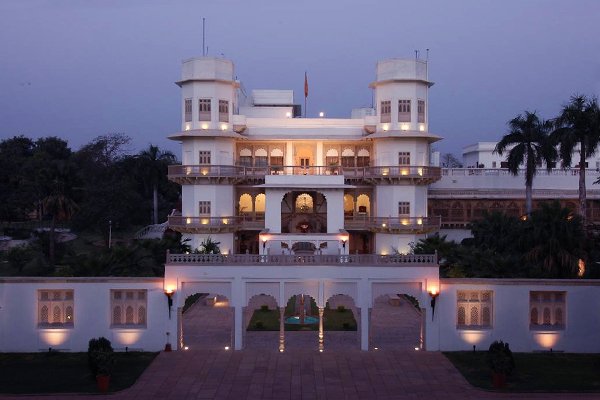
The Usha Kiran Palace is a 120-year-old palace, which has played host to the King of England and is now a heritage hotel. Set amidst 9 acres of beautifully landscaped lawns, this regal palace, rich in history, is outfitted with artistic stone carvings and delicate filigree work No two rooms are alike, but each has a luxurious j...

Get Free Tour Plan