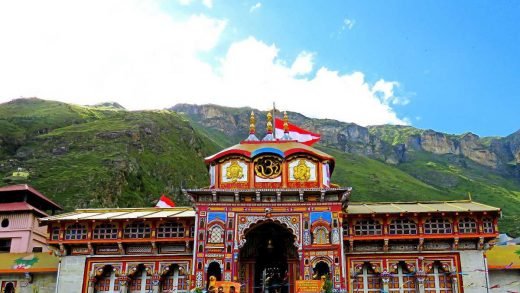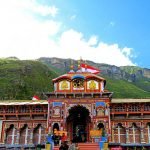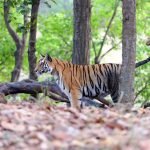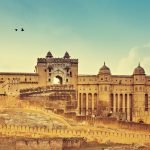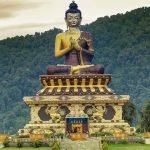

Himachal Pradesh, also known as Dev Bhoomi , is a true paradise with great natural beauty & spiritual peace. The beautiful valleys surrounded by snow – capped peaks, rivers, flowing placidly in the valleys, dense forests of deodar and oak, flowering meadows, glaciers and high altitude lakes brings an ethereal worldly beauty at your door steps. No doubt, this ‘Himalayan Jewel’ is a tourist’s dream and delight. After independence, 30 princely states of the area were united and Himachal Pradesh was formed on 15th April, 1948. With the re-organization of Punjab on 1st November, 1966, certain areas belonging to it were also included in Himachal Pradesh. Finally, on 25 January, 1971, Himachal Pradesh attained full-fledged statehood.
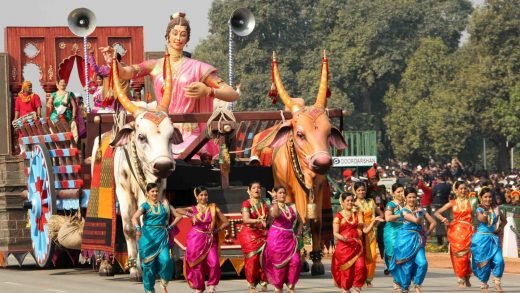
The state is renowned for its honesty, tolerance and hospitality. They are mostly Hindus by faith and each village has its own traditional deity. The state is dotted with thousands of temples and is also called as ‘Dev Bhoomi’ or the abode of Gods. Himachal is also a land of colorful fairs and festivals which are unique in style and attractive in display. The most important fairs are Minjar of Chamba, Shivratri, of Mandi, Dusshera of Kullu, Lavi of Rampur and Renuka of Sirmaur. The beautiful state also provides great opportunity to adventure and fun seekers and is considered an ideal place for activities like trekking, mountaineering, fishing, rafting, skiing, para gliding, ice skating and golf. A visit to this enchanting land is the most relaxing and satisfying experience.
Shimla, the biggest hill station of India and the capital of Himachal Pradesh is perched at a height of 2100 metres. The stunning beauty and charm of Shimla was first discovered by a British officer, Lt. Rose, during the Gorkha war and was named after the temple of Goddess Shamla, which was situated here amidst thickly wooded forest. Shimla became the favorite hill resort of the British and also the summer capital of India during the British Raj. Tourist from all over the world comes to India to visit this beautiful hill station.
AROUND SHIMLA
CHAIL (43 KMS): The tiny hill resort amidst verdant forest was established by Maharaja Bhupinder Singh of Patiala, after he was banned to enter Shimla by Lord Kitchner in 1891. Chail sprawls over three hills – atop the Rajgarh hill is the palace; old residency ‘Snow view’ on the Pandava Hill and Siddh Tibba is known for the temple of Baba Sidhnath.
Kufri(16 Kms): The tiny picturesque hamlet is very popular among tourist. During winters a large number of winter sports enthusiats flock to this fine skiing resort. There is also a small zoo. The Himalayan nature park here provide eco treks and camping site.
Kasauli(75 Kms): Captivating Kasauli, nestled at a height of 1927 metres is noted for its colonial charm, lush tranquil surroundings full of deodar and pine trees, scenic views and cleanliness. It was founded by the British forces in 1841 and developed as a cantonment sanatorium. The pasture institute established here in 1900, is the oldest of its kind in the country. Kasauli lies in the Solan district and is 12 kms. from Dharampur, located on the Kalka Shimla Highway.
Chamba: Charming Chamba founded by Raja Sahil Varman in early 10th century, nestles on a plateau on the right bank of the River Raavi, like a medieval Italian Village fortress. It is Known for ornately carved temples, palaces and stylized buildings.
Dalhousie: Delightful dalhousie, a hill resort par excellence sprawls picturesquely on five hills on the outer slopes of the Dhauladhar ranges. Lord Dalhousie, the Governer- general of British India between 1854 and 1856, founded the resort and conceived it as a sanatorium due to its bracing climate and scenic beauty. The quaint little hill resort surrounded by oak and pine trees still retains the colonial ambience, which is very well reflected in its gable- roofed bungalows and churches.
Dharamshala: The ‘Scotland of India’ is one of the 80 Hill Resorts established by British. It is elegantly set on the spur of the Dhauladhar range and the snow line easily accessible as compared to other hill resorts. McLeod Ganj and Forsyth Ganj, the suburbs of upper Dharamshala still retain the British flavour, while the Lower Dharamshala is a busycommercial centre. It is also known for being the headquaters of His Holiness the Dalai Lama and referred as the “Little Lhasa in India”.
Kullu: Kullu town is set on the river Beas in the strikingly beautiful kullu valley, also known as ‘ valley of Gods’. The world renowned annual Dussehra festival of Kullu is celebrated in september/ october. The festivities are organised at Dhalpur maidan, about 1 km. from Raghunathji Temple. During this time icons of all the deities of kullu valley are brought here in colorful processions to attend the darbar of Lord Raghunathji.
Manali: Magnificent Manali, one of the most popular hill resorts of the country is set picturesquely on the confluence of Manalsu and Beas rivers, surrounded by snow clad peaks and thick forest and fruit laden orchards. Mythological legends indicate thhat the name Manali is derived from ‘Manu-Alaya’, the home of Manu, the great Hindu Law giver and it was from here that the human race came into being after the great deluge.
Lahaul & Spiti: The Lahaul & Spiti district adjoining Ladakh is an entirely different world – snow bound and isolated from the outside world for over 9 months in a year. The inhospitable terrain full of glaciers and high altitude lakes is endowed with awe-inspiring beauty. Buddhism was introduced here in 7th century and the people of the region have preserved their unique culture and heritage. The district is dotted with over 53 monasteries, which are not merely the seats of religion but the founts of power and repositories of art and religious manuscripts. The main towns of the district are Kyelang and Kaza.
Tabo Monastery: This famous Gompa was founded in 996 A.D. and is regarded as the ‘Ajanta of Himalayas’, due to its exquisite wall paintings and stucco statues. It is the second most important Gompa after the Tholing Gompa in Tibet and has been declared as a ‘World Heritage site’ by the UNESCO. This large monastic complex has nine temples, 23 ‘chorten’, a monks chamber and a nuns’ chamber besides several caves and contemporary structures. It houses a large collection of scriptures, wall paintings and murals.
Mandi: Magnificent Mandi, an important historical, cultural and religious centre nestles on the left banks of the river Beas. It was the capital of erstwhile princely state of mandi and also a major commercial centre. Mandi also known as ‘Varanasi of Hills’, has 81 exquisitely carved temples. The important are of Bhutnath, Triolknath, panchvaktra and shyamkali at Tarna Hill. The town is famous for its unique celebrations last for eight days and during this time images of the deities of the nearby temples are brought in a colorful procession to the Shrine of Lord Bhutnath.